Wednesday, December 7, 2011

The Time Savers Part II

Back in August I started a multi-part blog on time savers. A good brush was the first part of this series. Now we move on to the number 2 time saver for most homeowners and pro’s alike, the roller.

If you are doing any amount of large surfaces, a roller can be a key to maximum production. Choosing the best one for the job at hand will speed up job completion. Like the brush, we recommend purchasing a good roller arm and covers (or pads).


Roller arms are not all the same and a good one will last a DIY’er a lifetime. Look for the thickest shank (the metal part that the handle is mounted to) to keep it from flexing while rolling. The best ones will have built in bearings on the part that spins and hold the roller cover. This makes it easier to roll down the wall without “skidding”. Some also have quick release systems built in so it can be quickly snapped on and off compatible roller poles.

There are plenty of good ones out there but my favorite is the Wooster Sherlock frame pictured above. It has all the features mentioned above and it can easily be found at most paint and big box stores. Here’s a video link at Wooster’s site. You can get these for both 9 inch and 14 inch roller sleeves.

The frame does you no good without a roller cover and like frames there are a ton of choices. Rather than go through each cover and material, we are just going to touch on the more common ones, choices that will deliver a good job. Like many things, price will determine the quality of the cover and its ease of use.


     Cover materials are both man-made and synthetic. Most pros like wool the best, but they are pricey. A good second choice is a 50/50 blend of polyester and wool. Both of these covers will work in all paints and generally clean up easy. Personally I’m a big 50/50 fan as it has similar performance of wool at half the cost and probably Family Professional Painting’s number one choice.

    The next material choice (for me) would be the synthetic wool or polymide. Which has the characteristics of wool while holding more paint. Nobody does this better than the Purdy Corp.


   There are a slew of other materials out there, but probably the main things you need to be concerned about is how it is made and will it work with your paint. The covers listed above will pretty much work in all paints and stains, latex or oil.

    Check the length of the “nap”. It will be listed on the cover some where. That is the length of the fibers holding the paint. Generally use longer naps for rougher surfaces and vice-versa. The most common is the ½ inch nap for walls and ceilings. If your walls are in rough shape, you may even want to use a ¾ inch for the extra “stipple” (texture) that aids in making some imperfections less noticeable. They make much shorter naps for smoother finishes, but they will not hold much paint and you will find yourself dipping much more often. I would avoid using a nap shorter than 3/16 inch. The packaging on most roller covers will provide information to help you choose.

Last choice is roller cover width. Without going into too much detail, use the widest cover you can for the job. This will increase production. We use 14-18 inch covers and frames as much as possible, but something you need a shorter one. It’s not uncommon for us to use a 6 inch roller in tight confined rooms. (A powder room)

Let’s recap:

• Get a roller frame with a thick shank to prevent flexing and internal bearing for smooth rolling.
• Wool, wool blends and synthetic wool cover offer the best combination of finish, cleanup, shed resistance and long life. They will also work in almost all paints and stains.
• Nap length helps determine how much paint you get to the wall and the “stipple” or texture it leaves on the surface. Longer naps for rougher surfaces (block walls) and vice-versa.
• Use the widest cover you can for the task at hand. I don’t recommend that homeowners go wider than 14 inch.

If there are any topics you'd like us to cover, lets us know.

Thursday, November 24, 2011

Why you shouldn't "Just Paint It".

Dug up a photo of an exterior we did over the summer. The picture is of aluminium siding that was pressure washed. We purposely stopped so the home owner could see why we recommended cleaning before painting.


Paint would not stick to a chalking surface like that.(At least not that long) The extra work may be more costly, but it is an investment in a longer lasting and properly done paint job.

When gathering estimates together for your next project, keep in mind that prep is one of the most important if not the most important processes in a long lasting paint job.

Have a great Thanksgiving.


Dale

Thursday, November 10, 2011

Coming Soon To A Paint Store Near You?


This past summer Benjamin Moore sent us some exterior paint to evaluate.

Ultra Spec is another addition to their line that utilizes their excellent colorant system. One has to assume it is to be (if brought to market) aimed at the lower price point. Note our analysis is base on limited use.

We were given the choice of how we wanted the paint tinted and sheen's. We chose a white tint base in a satin for two reasons. One, tint bases usually are lacking in hide because they are meant to have colors added. This would give us the opportunity to judge "hide". Two, it was a re-paint and a reduced sheen helps to minimize to rough areas appearance.

The paint was brushed, rolled and sprayed.

Brushing it on a 90 degree (plus) day in direct sunlight was actually enjoyable. Most modern paints dry too quickly and leave very little if any open time. The Ultra Spec was applied in direct sunlight early in the day (about low to mid eighties) and allowed one ample time to apply it and lay it off. It kept a wet edge in that heat better than most products. It flowed well and like all Ben Moore paints with "Color Lock" technology it also covered well.

If there was a downside to brushing, it is the viscosity of the paint. It is stringy. If you are not super diligent of tapping the excess paint off the inside of your bucket, you will get strings and drips as your brush comes out of the can. Similar to Super Spec or PPG's Sun Proof exterior paint. It is a trait that doesn't bother some, but it irks the hell out of me. It's messy.

It rolled well although not as spatter free as I would like, but it was acceptable. Expect to get some on you and the surrounding work area.

We also sprayed some CMU with it. I actually liked spraying it. It covered well, went pretty far, and you could load it up a little without runs.

All in all, it seems to be a decent product. just have to wait to see if it ever comes to market.

Ultra Spec:

Pros:

Color Lock Technology.
Good open time.
Good hide even in a "tint base"
Price point?

Cons:

Messy
Not available. (yet)

Thursday, October 27, 2011

Being Courteous Is A Two Way Street.

We love our customers and many of them love us back. Being in any service oriented business one expects to be treat with dignity, courtesy and kindness. We watch what we say, try to wipe our feet, clean up, be punctual and just set a plain good example.

Most contractors give free estimates. We are flexible so as to meet your schedule. Burn up our gas and time to maybe have an opportunity to serve you. The expense of these "free estimates" are borne by the contractor and are a part of the business.

How many people actually appreciate the costs in money and time that we expend for your benefit? I say that most do, but many show a great lack of respect. They could care less about a contractor's time spent away form his family, the costs incurred if they think of it at all.

So, you may ask. Why the rant? Because you can't take the time to let me know that (a:) you received the proposal and (b:) that you have made a decision about the job.

A little "thank you for coming out and providing this estimate" would be nice. We get that often. but some where, some how, many people just forget how much that little kindness means to a guy or gal who went out of their way to provide a "free" estimate.

Show you appreciation. Even if you did not choose us. Contact your contractor and let him know you appreciated the time they took out of their busy day, for you. It will make their day and set you apart from the crowd.

Wednesday, October 5, 2011

We got "Quoted"!

The Recent issue of "Taste Of The Bay Magazine" asked us about some recent trends in painting and our views on a few subjects. They took Family Professional Painting's answers and included them in both the article and a side bar.The October issue is out, but the website as of now has not been updated.

Due to editing, they got the gist of what we were saying correct, but the numbers are off. So here are the actual answers copied and pasted from the email:

If you are willing to be quoted, please answer the following for me:

1] Regarding color: What are the trends in color choice you are seeing this year?

The big trend has been bringing nature indoors. Muted greens seem to be the color of choice followed by tans. Also pure white on trim is slowly being replaced by off whites and creams.

2] Regarding paint in general: What are some of the major factors people should consider when choosing a paint for their home (interior paint primarily).

First, stick with the premium products. They cover better and retain color longer in sunny areas and tend to touch up easier.
Second, think about paints that are washable and scrubable. If you have pets or children, you will get mess on the walls. Having the ability to clean the surface prolongs the time between having to repaint. Staircases, (why don't kids use the handrails?) bathrooms and hallways are prime candidates for dirty handprints


3] Are there any myths or misconceptions people tend to have when choosing paint?

Three big misconceptions are that that you need a shiny satin or semi gloss paint to be able to clean it and that cheap paints are just as good as premium paints. Last is that enviromentally safe paints don't work.

There are some excellent matte/flat paints that offer a durable washable/scrubable coatings. Benjamin Moore's excellent Aura line and Berh Flat Enamels come to mind.

Second, cheap paints are just that, cheap. Manufacturers have to cut corners somewhere and that is usually in the resins and colorants made into the paint.
Say you are painting a room and you can either spend $40.00 on paint or $100.00 on paint. The cheap paint burnishes (leaves a shiny spot) the first time you try to clean it and after 3 years it just looks poorly. Now you decide to re-paint. That material cost you $13.33 per year.Same color and room with premium materials. A good washable paint and it looks good for 10 years before it needs to be re-painted. That material only cost you $10.00 per year and saved you a lot of headache. Premium paints are a better long term investment.


When "green" paints first hit the shelves, they left something to be desired. Most were harder to work with, covered poorly and just didn't last. Technology has finally caught up and some of the best paints out there are enviromentally sound products. In fact all of the waterbourne paints available in the area are vastly more green than just 5-10 years ago.


Not a huge difference and they can't be blamed for editing. (I get longwinded) Of course we are always happy to receive any publicity and would like to thank Kimbra Cutlip and Taste Of The Bay Magazine.

Friday, August 5, 2011

Tips for LinkedIn users

Here's a link for all you business people who use LinkedIn. A few good tips there.

Wednesday, August 3, 2011

The Time Savers


Beware the barrenness of a busy life.”
Socrates


“From the time we're born until we die, we're kept busy with artificial stuff that isn't important”.
Tom Ford


Time is a big deal anymore. Most never seem to have enough of it and once it’s used you can’t get it back. Work, family, kids, sports, friends, cut the grass, paint the house. (aaarrrgh!) Well in this multi part blog (I don’t have time to do it all at once) we are hoping to introduce you to a few things that make the painting faster and more efficient.

Of course the fastest and most efficient way to get that painting project done is to hire a professional paint contractor. Hiring a pro allows you to carry on your day to day life. You can perform more productive and more enjoyable tasks instead of the drudgery of painting. (Hint, hint!)

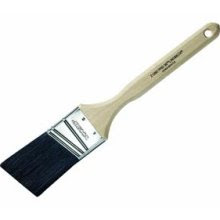
SO, if we haven’t scared you off yet, the number two tip (number one is hiring me) is purchasing a good brush.


Surprised? Don’t be. A good brush is designed to perform several important functions that will make painting faster and easier.

1. A good brush is designed to hold more paint, so you cover more surface area before having to load (dip) it up again.
2. Pro brushes are designed to release paint quickly and smoothly, with less effort.
3. Pro brushes are offered in multiple designs and filament materials. This allows you to tailor the brush to your needs.
4. With proper care, pro brushes would likely last a homeowner a lifetime.

We could write several blogs on just which brush to use where. So in the interest of brevity let’s narrow it down to just a couple. Today, most painters and homeowners alike use predominately latex/acrylic paints. So, a synthetic bristle brush is in order.

Brushes do come in several levels of “stiffness”. As a general rule, if you are working in the heat a stiffer brush is better. The heat will slightly soften the bristles.

Brushes also come in different widths, angles and shapes. Again, in the interest of brevity, we recommend you use the widest brush you are comfortable with. This allows maximum paint pickup and release while dipping (loading) less.

If you are cutting in trim, you are going to want an angled brush. If you are doing siding or flat boards you probably want a straight brush.

If you want a recommendation. If I had to have just one brush, I’d go with Wooster Brush’s Alpha line. They have the stiffness, can be used in all paints and are available in most popular shapes and sizes. A 2 or 2.5 inch angled sash is good for most novices. Pro’s are going to have a selection. (One of my favorite’s is the semi oval)

Hope this information helps. If you are looking for local help, go to an actual paint store, the big box stores won’t have the selection or the personell to help you find the best match.

You can also visit Wooster’s site here. They have great customer service, and online dealer locator and more.

You can also view my earlier review of Wooster’s new Chinex FTP brush by clicking here.

Our monthly newsletter, Around The House News, features expert advice and tips from professional painting contractors. The newsletter contains several areas of interest including home care, painting and repair, and tips for around the house. Best of all it's free. Sign up for your copy here.